


A science centre visit does not have to end when visitors leave the exhibit.
Families may continue discussing what they discovered at home. Students may return to a question raised during a field trip. Campers may want to show their parents what they built. These moments can extend learning, strengthen community, and give science centres a clearer understanding of what mattered to visitors.
The practical challenge is creating simple, voluntary ways for people to participate.
The Science Centre Engagement Playbook offers a useful starting point. It focuses on reflection, participation, ethical storytelling, and the long-term value of visitor stories.
1. Invite visitors to reflect before they leave
Reflection does not need to be a formal survey. A single question can help visitors pause and connect an exhibit to their own lives.
Try prompts such as:
- What surprised you today?
- What question are you still thinking about?
- What would you tell a friend not to miss?
- What did you build, test, or discover?
- Where might you see this science in everyday life?
Place prompts where visitors naturally pause, such as:
- Near exhibit exits
- At family activity tables
- In camp and classroom spaces
- Beside a QR code contribution sign
- Near seating or gathering areas
The goal is not to collect lengthy responses from everyone. The goal is to make participation easy for visitors who want to share.
Practical takeaway: Start with one clear question connected to the exhibit or program. Make it easy to answer in a few words, a photo, a drawing, or a short voice message.
2. Give visitors more than one way to contribute
Not every visitor wants to write a formal comment. Some people may prefer to share a photo. Others may contribute a drawing, video, question, or short story.
For families, students, and campers, useful contribution options may include:
- A favourite photo from the visit
- A drawing of something they discovered
- A short video explaining an experiment
- A question they would like an educator to answer
- A reflection about a challenge they completed
- A story about a memorable moment
- A photo of a project or creation
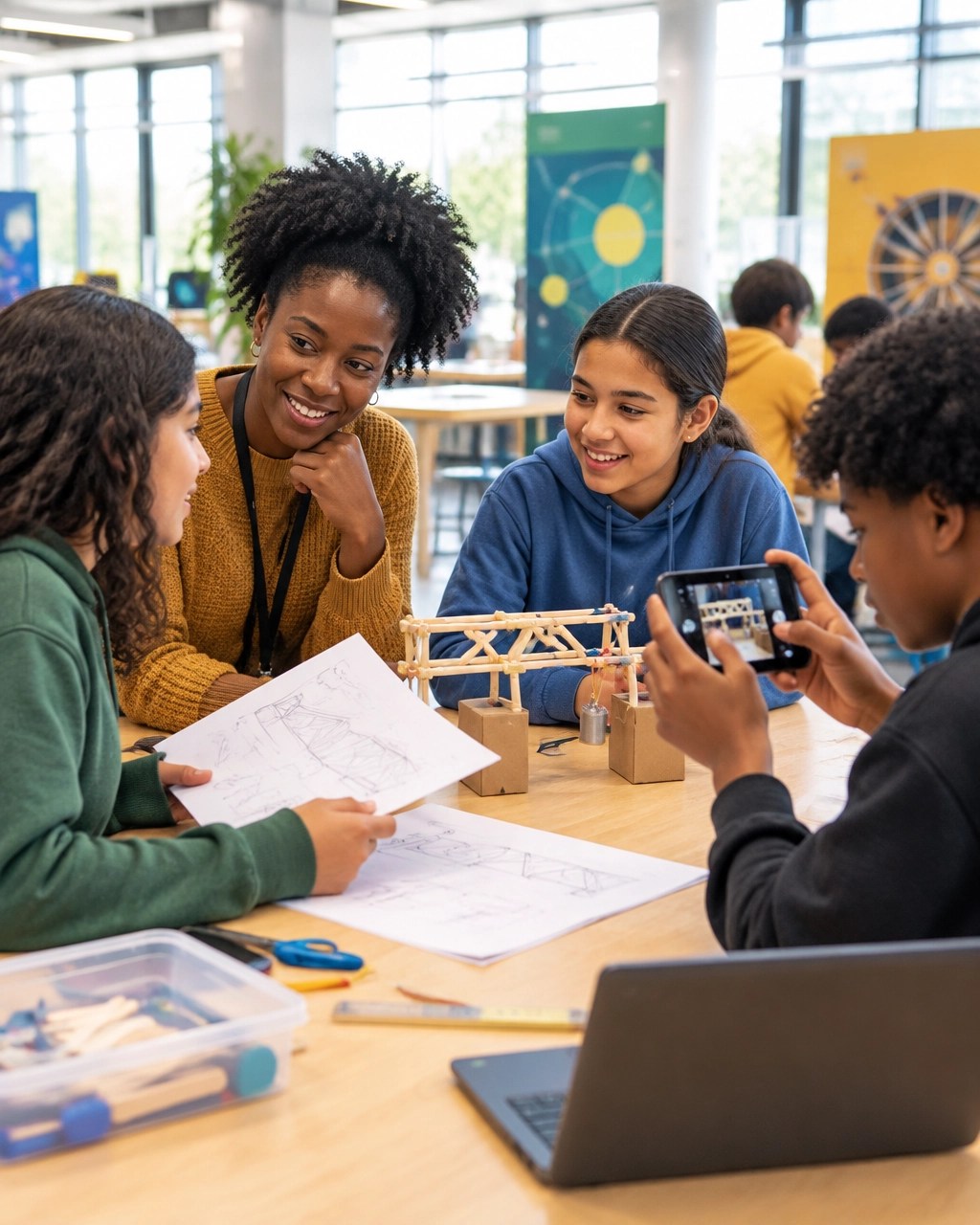
This approach supports different communication styles and makes the experience more accessible. It also changes the relationship between the science centre and its visitors. People are no longer only receiving information. They are contributing to a shared record of discovery.
Practical takeaway: Offer a small number of clear choices. Too many instructions can reduce participation. A simple message such as “Share a photo, question, drawing, or story from your visit” is often enough.
3. Extend learning for families, schools, and camps
Visitor contributions can help science centres continue the learning experience after the visit.
For families, a shared digital story can provide a way to revisit the day and continue conversations at home. For school groups, student questions and observations can support classroom activities. For camps, daily contributions can become a slideshow or end-of-week story that celebrates what participants explored.
Consider creating different prompts for each audience.
For families
- What did your group enjoy exploring together?
- What would you like to investigate at home?
- Which exhibit sparked the most conversation?
For students
- What did you observe?
- What would you test next?
- What question would you ask a scientist or engineer?
For campers
- What did you build today?
- What problem did your team solve?
- What are you proud to show your family?
A QR code or shareable link can be placed on signage, activity instructions, take-home materials, or a follow-up email. Visitors should be able to contribute from their phones without downloading an app or creating an account.
Practical takeaway: Connect every contribution opportunity to a next step, such as an at-home activity, a classroom discussion, a camp slideshow, or a return visit.
4. Build community through shared discovery
When visitors see contributions from other families, students, or campers, they can imagine themselves as part of the learning community.
A shared gallery might include:
- Family discoveries from a weekend visit
- Student reflections from a field trip
- Camp projects and daily highlights
- Questions visitors want explored in future programming
- Photos from a special event or science demonstration
This content can be displayed during an event, shared in a follow-up email, embedded on a website, or curated into a longer digital story.
The most effective community galleries are thoughtfully moderated. They should reflect the science centre’s values, protect visitor privacy, and make participation feel welcoming rather than competitive.
You can also close the loop by showing visitors how their contributions are being used. For example:
- “Your questions helped shape next month’s activity.”
- “Visitor reflections are helping us review this exhibit.”
- “These camp discoveries are now part of our end-of-season story.”
Practical takeaway: Do not collect stories and let them disappear. Review, organize, and share appropriate contributions so visitors can see that participation has a purpose.
5. Make privacy and consent part of the experience
Visitor storytelling works best when people understand what they are being invited to share and how the content may be used.
Before collecting photos, videos, drawings, voice messages, or stories, communicate:
- Participation is voluntary.
- Visitors can choose what they share.
- The science centre’s intended use of the content.
- Whether contributions may appear publicly or in marketing.
- How visitors can request changes or removal where applicable.
- How content involving children and school groups will be handled.
Extra care is needed for children, youth programs, camps, and school visits. Follow your organization’s consent policies and applicable requirements. Make sure parents, guardians, educators, staff, and volunteers understand the process.
Avoid collecting more personal information than necessary. A contribution form does not always need a full name, email address, or other identifying details.
Practical takeaway: Use plain language and give people a genuine choice. Trust is more important than maximizing the number of submissions.
6. Turn visitor stories into institutional knowledge
Thoughtfully collected visitor stories can become useful beyond the day of the visit.
Over time, organized photos, questions, reflections, and videos may support:
- Exhibit evaluation and future design
- Education and program development
- Grant reporting and impact documentation
- Donor and sponsor stewardship
- Marketing and communications
- Volunteer recognition
- Staff onboarding
- Historical archives
- Community partnership development
Visitor stories do not replace attendance data, surveys, or formal evaluation. They add context. They can help explain what visitors noticed, what inspired them, and which experiences created meaningful connections.
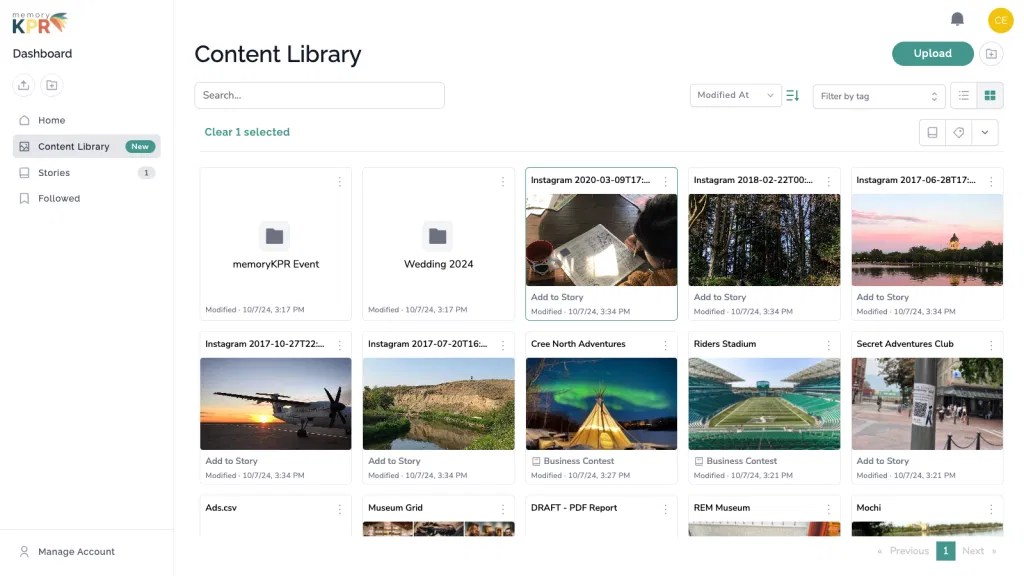
To make this information useful, establish a simple organizing process:
- Collect contributions through a consistent channel.
- Review submissions for consent, privacy, and suitability.
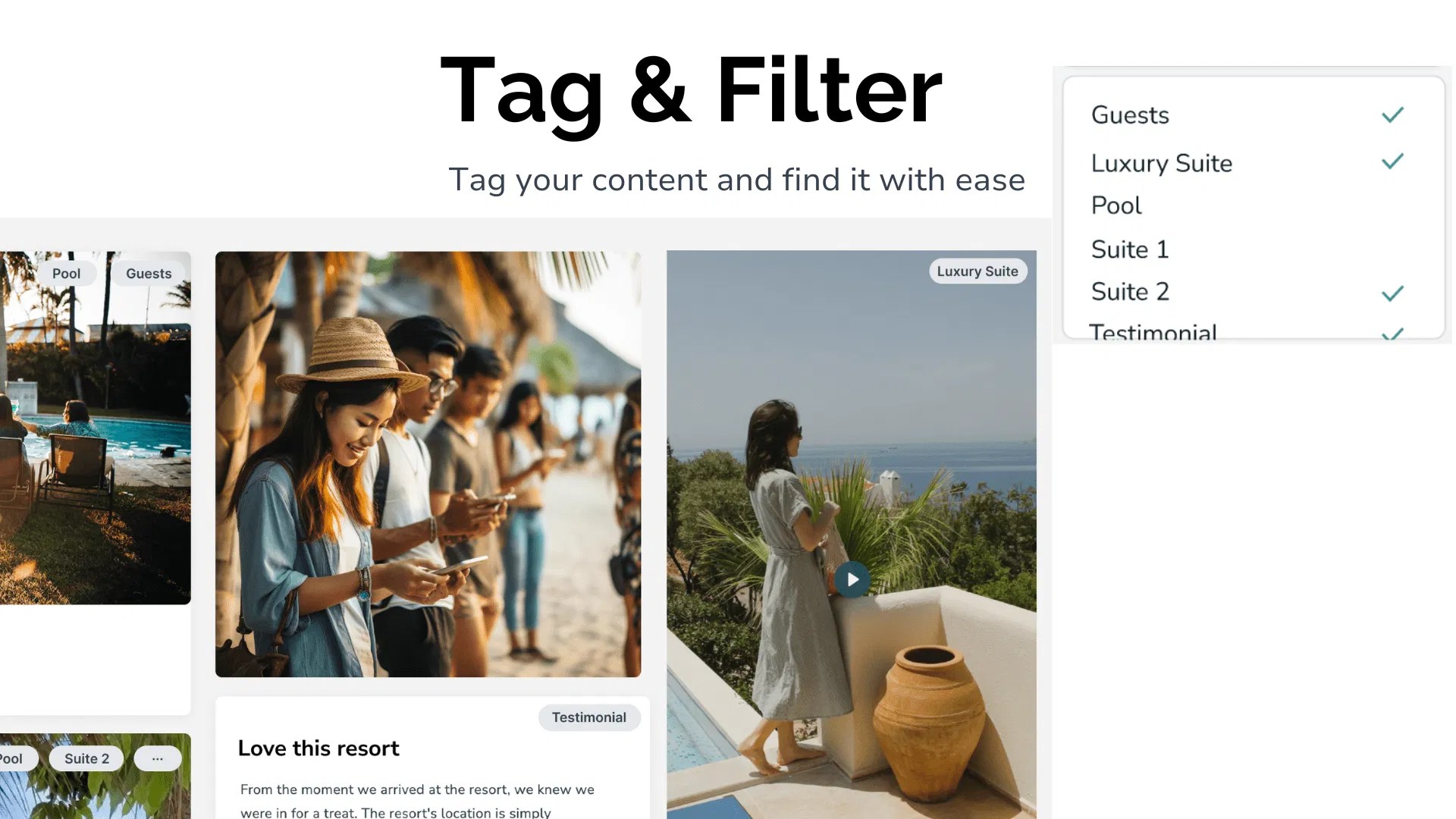
- Tag content by exhibit, program, audience, date, or theme.
- Store approved content in an organized library.
- Reuse stories only in ways that align with the original permission.
- Review what the stories are teaching your team.
A searchable content library makes it easier to find examples later, whether you are preparing a grant report, planning a campaign, or reviewing an exhibit.
Where memoryKPR can help
Once your science centre has decided what it wants to collect and why, a platform such as memoryKPR’s museum solution can make the process easier to manage.
memoryKPR allows visitors to contribute photos, videos, and voice messages through a QR code or shareable link, without an app download or guest account. Your team can then organize contributions into branded digital stories, moderate submissions, manage permissions, and preserve content for future use.
It can support experiences such as:
- A family reflection gallery after a weekend visit
- A live slideshow during a science event
- A shared story for a school field trip
- A daily camp album
- A visitor question collection
- A digital archive of community discoveries
The value is not simply collecting more content. It is keeping visitor participation organized, purposeful, and respectful.
Start with one small experience
You do not need to redesign every exhibit to begin.
Choose one upcoming event, camp, family program, or exhibit. Add one reflection question, one QR code or link, and one clear explanation of how contributions will be used. Review the results with your education, visitor experience, marketing, and privacy teams.
Then ask:
- Did visitors understand the invitation?
- Was participation easy?
- What types of contributions did people make?
- Did the content reveal anything useful?
- How could the experience be improved?
Curiosity does not end at the exit. With the right invitation, it can continue through family conversations, classroom activities, shared stories, and future discoveries.
For the complete framework and practical ideas, read the Science Centre Engagement Playbook.


